Showing posts with label Book. Show all posts

Saturday, September 24, 2011

FAM Step 1: The Menstrual Cycle

FAM: Fertility Awareness Method

This is a follow-up to the post on myths about contraceptives.

As recommended by the instructor of that talk, I picked up the book "Taking Charge of Your Fertility: The Definitive Guide to Natural Birth Control, Pregnancy Achievement, and Reproductive Health" by Toni Weschler (book cover from their website, see it here). I tried with all my feminist might not to feel awkward finding it and buying it from the bookstore, but alas, it was awkward.

The first couple chapters were essentially about the myths about contraceptives and widespread misunderstandings that were further perpetuated by ignorant health professionals (like me). The third chapter was about the reproductive anatomy of both men and women, parts of which I'll touch on in this post.

The chapter I wanted to discuss, however, is this one.


Chapter 4: Finally Making Sense of Your Menstrual Cycle

You'll be perhaps a bit shocked to know that I have been reading this book aloud in the evenings and that both P and I have been enjoying it. It's well written, comprehensive, and even pretty funny at times.

FELOP
Most of us have seen this diagram before. Lots of lines, very little concrete meaning.

The menstrual cycle has two phases -- Follicular and Luteal -- with ovulation as the dividing line. FELOP is an acronym to help with the order of the hormones.

Folicular phase
This phase starts at the first day of menstruation (menses) and lasts a different amount of time for different people, averaging (but not set on) about 14 days. F is for FSH (Follicle Stimulating Hormone), as it surges at the far left of our chart, 15 to 20 lucky eggs start to mature in each ovary. Each embedded in their individual follicles, they race to grow the biggest to be the one egg that is released that month.

This process is fairly sensitive to lifestyle or physiological factors (e.g. stress or hormone insufficiencies), that cause a delay in the release of the winning egg. It takes whatever time the body needs to reach the threshold of (E is for) estrogen to cause ovulation (it make take 14 but it may also take 30 or any other number, prolonging or shortening the length of that person's cycle that month). At the threshold, estrogen opens the floodgates of LH (L is for Luteinizing Hormone) which cause the egg to burst through the ovarian wall (O is for Ovulation) within a day or so.
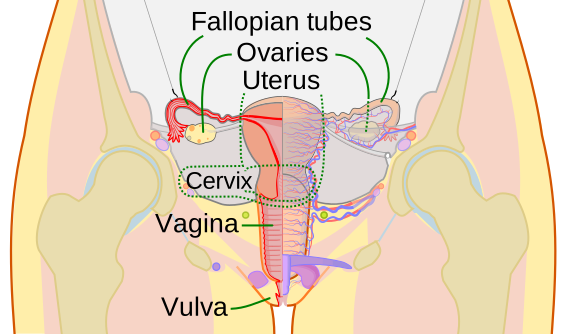
The unlucky remaining eggs disintegrate (atresia). The winning egg, ironically the size of a period at the end of a sentence, "tumbles out into the pelvic cavity, where it is quickly swept up by the fingerlike projections of the fallopian tubes, called fimbria... the fimbria reach over and draw it into the adjoining tube. Occasionally, the fimbria do not retrieve the egg, and therefore pregnancy would not be possible that cycle."

Left behind, the follicle that the winning egg was sitting in becomes the corpeus luteum, hence the name of the cycle from this point on.

Luteal phase
Unlike the follicular phase, the luteal phase is more defined in length, because the corpeus luteum has a finite lifespan of about 12 to 16 days (averaging just over 12 days). In blue on our chart, it's role is to release (P is for) Progesterone which
- prevents the release of another egg (thank goodness that twins is not the norm, but on occasion two or more eggs are released and if fertilized by sperm will be fraternal twins)
- cause the lining of the uterus (called endometrium) to thicken and get ready for a potential pregnancy
- cause the 3 primary fertility signs to change: waking temperature, cervical fluid and cervical position

The egg only lives for 24 hours.

Conception
If one of the very numerous handsome sperm travels up meet and fertilize the egg in the fallopian tube, the two are bonded, preventing other sperm from coming in. They travel for a week down into the uterus and plant themselves into the endometrium.

If conception does not occur and send feedback to the the corpeus luteum to hang in there, it lives out it's life span and menstruation finally occurs starting a new cycle.

Thursday, September 15, 2011

Global Enviro. Change & Human Security

An Introduction

by Jon Barnett, Richard A. Matthew and Karen L. O'Brien


I read the intro to this book as a pleasure read after some questions arose from my work assignment on summarizing gender and climate change. The words used in dialogues of climate change and action were ambiguous and I wanted to shed some light on social justice in this area.

Oddly enough, I've already returned this book to the Toronto Public Library but a good portion of this chapter is available on google books.

Firstly, the authors define what is meant by "global."
These environmental changes are "global" because they are ubiquitous and because some pollutants such as greenhouse gases and radioactive wastes have global consequences. They are also "global" inasmuch as their origins lie in the consumption of resources in markets that are often very distant from the sites of resource extraction [...] "Global" in this sense does not mean that responsibility for environmental change is shared equally among all people, or that the impacts of these changes are uniformly distributed among all places. Instead, global refers to the linkages between environmental changes and social consequences across distant places, groups and time horizons.
Security, though it seems to hint at the more traditional view of military security, in this book is defined much more broadly to represent energy security, economic security, environmental security, food security and so on. Unfortunately, it is along the military and strict immigration policy fronts that governments have been securitizing their boarders in the face of global environmental change. Though perhaps, what books like this one are trying to point out is that global environmental change knows no boarders, and those who are already marginalized suffer more from shifting funds into military/securitizing actions and away from sustainable development, including development to promote social justice.

From their website (see it here), they define human security as such:
a state that is achieved when and where individuals and communities have the options necessary to end, mitigate or adapt to threats to their human, environmental and social rights; have the capacity and freedom to exercise these options; and actively participate in pursuing these options. As with most definitions of human security, the focus is on security for individuals and communities, rather than on states.
It is about needs and rights. It is about how current violations of needs and rights can only get worse for many communities and individuals. Perhaps it is important to consider, for a moment, that feelings of security, certainly at a personal level are merely perceptions. I perceive that I live in a safe neighbourhood with good access to food, etc. , but compared to what? Without digging myself too deeply into relativism, I am trying to say that perceptions are important, pointing out the strengths and weaknesses of communities and individuals to environmental change is important in shaping their needs and wants. If led to feel too secure, some feel that their input is not needed and what will be will be, without further regard for the needs and wants of their neighbours and neighbouring communities. It is in shaping human security as global that we must take responsibility and culpability for the lack of human security and the threats we pose on others' human security in the world we share.

Thursday, July 28, 2011

Tardive Dysphoria?

"Now Antidepressant-Induced Chronic Depression Has a Name: Tardive Dysphoria" read the title of the article in Psychology Today by Robert Whitaker (read it here). To me, this seemed an only natural light being shed on something that has been suspected and feared for a while now, that I felt I understood without even reading the article. For you, however, this might have very little meaning, so I thought I might try to explain some of the science behind it.


Synaptic Cleft

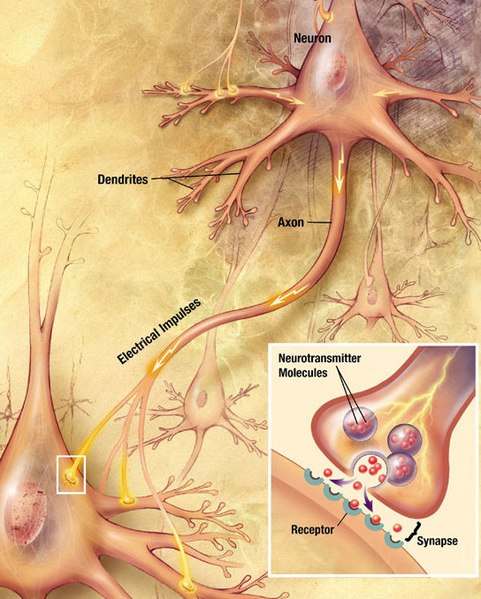
Your neurons can stretch for fairly long distances in your body (up to a metre). Messages are sent in the form of electrical signals, that flow down the long padded (myelenate) axons of the neuron. Neurons have endings that branch out like a tree, allowing them to send and receive messages to and from different neurons spanning different directions. At some point, though, the message must be passed on from one neuron (pre-synaptic) to the next (post-synaptic) and this happens at the synaptic cleft, the channel between them.

This area has been the focus of many of the drugs you may know, because it's a fairly simple concept of blocking or encouraging the mail man to deliver his message. The message, which could be a sensory one, such as pain, may still be happening but if it is not transmitted then the brain cannot interpret it and it is as if it never happened. Spooky.


SSRIs

Selective Seratonin Re-uptake Inhibitors work to maximize the transmission of Seratonin (sometimes called 5-HT) which is known as the well-being neurotransmitter (transmitter of neuron messages at the synaptic cleft). It is given to those who suffer severe depression, as it is meant to maximize their sensation of happiness with fewer side-effects than the alternatives.


At the synaptic cleft, electrical currents traveling along the pre-synaptic neuron cause neurotransmitters to be released into the void. There, they have a few options: they can be admitted into the next neuron (post-synaptic) or leftovers can be taken back into the the previous neuron (pre-synaptic) to be recycled or reused.

Now what if we blocked the second possibility? What if we only allowed for the neurotransmitter to travel forward, exciting the next cell, sending a message of well-being to the body and brain? That is the work of SSRIs, they bind to the re-uptake proteins, only allowing for continued release of Seratonin with no returns.


Tardive Dysphoria

If you have ever heard the word "tardive" before, it is possibly in the context of drugs for schizophrenia or parkinsons. Oliver Sacks writes beautifully about this effect in Awakenings, where parkinsonian patients were given a new medication (L-dopa) which "awoke" them from their slowed states. They were essentially "normal", for a time, but then they started to revert back, to a state sometimes worse than previously. So what happened? Part of what makes life so amazing on the planet is its ability to adapt to circumstances.

Basically, after prolonged and high dosage use, the body adapts to the effects of the medication. It says to itself, well, heck, if you're going to keep giving priority to these transmitters over those ones, I'm just going to slow down producing and releasing them!

Once taken off the drugs, the body does not seem to regain its abilities to produce and release seratonin the way it did before. This leads to the chronic depression known as tardive dysphoria, a state even more difficult to treat than untreated severe depression, because it has become resistant to the effect of the drugs.

Moral of the story, medication for depression is meant only in severe cases and should be considered a temporary aid to treatment (with a set goal to discontinue). Treatment must also include talk-therapy, cognitive reframing therapy or other alternatives, to ensure lasting positive outcomes.

Wednesday, July 13, 2011

The World as it is


I have already begun to develop a dark, pessimistic view of the corporate world and I shudder to think of what it might become when I have lived a longer in life. This blog has permitted me to exhibit positive sparks of thoughts and ideas, a slight shimmer of hope, but today I'm writing a reality check, as inspired-- if you can call it that --in part by this book "The World as it is: Dispatches on the Myth of Human Progress" by Chris Hedges.

The book is a compilation of politically charged essays that were originally published in Truthdig (see it here), a progressive news website. It was recommended to me when I started to blame myself for not being able to find a job. A journalist, who worked mostly abroad, he writes

Because the press is not concerned with distinguishing truth from news, because it lacks a moral compass, it has become nothing more than courtiers to the elite, shameless hedonists of power and absurd court propagandists.

Accountability

I have been having somewhat of an email debate with a website (probably best not to name it) regarding some of their posted information about medications that can be taking while breastfeeding. My argument is not against their recommendations-- I lack the information to really know whether it is true --but in their lack of citations, references or further recommended reading.

In their response, I was slightly appalled to read "We cannot put references in for every drug a mother might take. Besides most wouldn't be able to access them or, more importantly, to understand them."


So today, dear website writer, I hold you publicly accountable for what you have said.

1. If you are unable to reference every drug that you present, how can you claim this as conclusive evidence? It seems to me that you should only present the drugs that you know about, in order not to misinform.

2. Access: I have complained about this one before, but unless we lobby for more public access and encourage the use of publicly available articles, we will get nowhere. I spoke to someone at a talk about Research and Media and he felt that articles that are published in private journals will fizzle out in time, given the growing number of publicly available ones. The demand will shift, which we already see in the form of public databases or even google books and google scholar. The hope is also to have key informants, leaders, I suppose, that people may turn to who have access to the information that is needed.

3. Won't be able to understand them. This part hurts me, because I wonder whether our hearts are in the right place when we put out information guidelines to the public, whether we really believe that they will be effective, whether we really believe in capacity-building. How can we foster health literacy if we water down all the information? How can we expect the public to decipher messages strewn in corporate campaigns if they cannot understand research? Understand the words: accountable, conflict of interest, transparent, public or private, corporate funder, and so on.


Do we 

lower the standard 

or 

do we raise it?


Conflicts of interest and Transparency

I quite liked a quote on the UN Public Administration Program website (here) regarding Ethics, Transparency and Accountability:
The explosion of new information and communication technologies is also allowing for a rapid, global diffusion of ideas and practices, enabling the public to demand higher standards of ethics, transparency and accountability in the public sector.
In my reply to this email today, I wrote:
To sum, I thought the information you presented was interesting, especially in its clear clarification of which drugs can be taken while breastfeeding, I just wanted to see a little accountability. As an outsider looking at your website, I look for endorsements. I look for any sign that your information has been tainted by conflicts of interest, even in the form of a simple statement. These are words that the public needs to learn and grow used to.

Book cover from KPFK 90.7 FM website

Friday, June 10, 2011

Public Access to Information

I had a strange moment today, when, while reading the first chapter of Global Health and Global Health Ethics, I felt compelled to look up one of the sources of a most interesting quote. Seems simple enough, I switched on my University Virtual Private Network, opened the library website, and searched the article name. No hits. Strange.

On a whim, I decided to “google” it, the article, called “Moral Imagination: the Mission Component in Global Health” by the editor of the book, Solomon Benatar. Surprise! It was available, and not only that but available publicly from the FLoS Medicine Journal (Peer-reviewed open access journal published by the Public Library of Science).

This had me wondering a few things:

Why aren’t publicly posted articles available on the university library article search engine?

Why is access to scholarly articles not public information in the first place?

How are professionals supposed to maintain their registering body’s requirement to stay up-to-date when they are cut off from information drinking hole?

(I won’t even begin to ask why I still have access, given the threats of cut-off within 6 months, but let’s assume it is because of some work I did for the University post-graduation)
(also, not even delving into the fact that scholarly articles are not written to be readable by the average person)


All those questions in mind, here is the quote from “Chapter 1: What is Global Health?” which had me thinking of all this in the first place. To give some context, the book was discussing the medicalization and monetization of health, specifically the lack of consideration for basic factors such as “food security, clean water, sanitary measures or gender discrimination” and “universal access to basic health care”; and the attention that is instead drawn to “aspects of health that can be classified medically and treated with medications.”
This is just one of many examples of the medicalization of global health, increasingly associated with money as the most important bottom line in medicine. While such an approach has great potential to relieve the suffering of many individuals, it neither reveals insight into the extent more technology and drugs fail to necessarily improve the health of whole populations, nor into knowledge that the global economy is structured to maintain the wealth and health care (often wastefully provided) of those with resources, while extracting human and material resources from poor countries and thus sustaining impoverished lives with little access to health care other than that provided philanthropically.
You can read the concise and interesting article that is referenced for this passage here.

Friday, June 3, 2011

Human Rights and the Ethics of Globalization

I have not been as consistent in writing, as I have been so caught up trying to finish this book by Daniel Lee and Elisabeth Lee, a captivating read but also one that is due at the library shortly (even after two renewals).

So, I decided to finish off where I started in covering the ethics fundamentals from the first section of the book. It has been a pretty broad and philosophical overlook on the blog, but in the book, the next section covers case studies. In each chapter they use the ethics foundation to assess the situation, taking into consideration historical and political backgrounds, and come up with ways that would make these situations more ethically sound.

It seems to become increasingly relevant to think of people's motivations for philanthropic actions, especially in the land of profit above all else. The book considers the distinction between our beliefs of "near neighbours" versus "distant neighbours." Do we owe our distant neighbours the same dues as our near neighbours?

Human-Rights based ethic of globalization insists that everyone counts, that "anything that we do or anyone else might do that hurts other people is wrong, regardless of who they are and where they live." Seems simple enough, although it becomes quite complex when you think about all the people with vested interest on an international market on different levels: consumers, producers, stakeholders, distributors, managers, owners, etc.

It is important now to consider Kant's philosophy that
"all rational beings stand under the law that each of them is to treat himself and all others never merely as means but always at the same time as ends themselves."
Basically, for example, using workers in an inhumane sweatshop simply as a means to roll out profit does not honour the autonomy of all beings.

They also define fair trade, but because I have already done that once here, I will not do it again, though it is easy to note that it fits well within Kantian ethics.

To conclude, business exists to serve, but it ethically also has to appeal to the "overarching good of human flourishing" and "correct injuries" that it inflicts.

I found this next quote left me with a few things to think about when speaking of human rights, so I leave it with you:
"it might seem to some that it is less humiliating and more dignified to claim that something is owed to them, as opposed to asking for help as an act of charity"

Book Cover from the Toronto Public Library website

Tuesday, May 10, 2011

Female Aggression

There are a few chapters I want to highlight from this book by Natalie Angier, called Woman An Intimate Geography(1999), but this one was roaring out of me and I’m afraid I could no longer bottle it in before I finish the book. Last night, I had a dream where I was in the bus terminal and I’d just missed my bus, and I was just yelling and yelling profanities for what felt like an hour in dream time (probably 5 hours of sleep time).

The grr in aggression has us all a little on edge, we don’t want to hear about it, we don’t want to think about it, we like to deny that such a thing exists, especially when preceded by female. Oh yes, those dainty ladies who haven’t a streak of anger and frustration in sight. Angier says,
“We scorn the term feminist, roll our eyes at it. We say we’re beyond it, we’re all fine, we’ve fixed all the problems to begin with anyway,. We organize antifeminist groups and give them smart, snappy names with words like freedom and independent in them. We have so much aggression in us, we’re so alive, we’re wild, golden-eyed, and strong, and we take out our pistols and shoot at each other, or at the floor, at our glass-slippered feet.”
She talks about the lack of solidarity among women and groups of women. But hold on, let’s go back a little bit, to individuals, genders, feeling aggression.

Naturally, we all feel aggression at times. It has been a protective reaction (maybe?), either of self or of group. But over the years, all men aside, women have come to release their aggression in interesting ways, when it is socially unacceptable to just plain yell, ROAR.


Anxiety and Depression
Some women point their aggression inward, an intriguing theory of the cause of anxiety and depression in women. This is probably a pretty good argument for Cognitive Reframing therapies, that teach to restructure our thoughts in ways that our less abusive to our psyche in order to feel happier all around.

Passive Aggression
But another way of coping – if you can call it that – is often to point the aggression outward, and since outspoken expressions of aggression are often considered the “bitch” thing to do, many women seem to take the low route, passive aggression. That slow burn of subtle hints that leaves women, even when no passive aggression was intended, wondering if something was meant by a certain gesture, a certain choice of words. I think all genders alike suffer the blows of passive aggression.

Unfortunately, I can’t say that I’ve found a better outlet. In the book it seems a little like either you grow out of it or you try to point your aggression toward activism and solidarity. There are still many arguments to be fought on the grounds of social justice. But is that really for everyone?

So back to where I was, on the topic of solidarity of women, I wonder, are we so insecure of our relationships with other women, men, people that we aren’t able to find better ways of dealing with conflict? Can we all stop pretending that we're not all complicit? An immense hurt is caused by passive aggression, be it on purpose or misunderstood, and given the greater threats against women and women’s health, I think I’ll have to side with Angier on this one, unite!


Book cover from Natalie Angier's website, see it here: http://www.natalieangier.com/

Friday, April 29, 2011

The Photographer


Didier Lefèvre: Photography and Writing

Emmanuel Guibert: Drawings

Frederic Lermercier: Colouring

This excellent graphic novel and photographic montage that was republished in English (2009) as a compilation of the three issues which were more in the format of French Bandes dessinées (2003-2006). It's unfortunately available a lot cheaper as the English translation.


It tells the story of Didier Lefèvre, a French photojournalist, who accompanied Médecins Sans Frontières (Doctors Without Borders, see them here) while they were setting up medical clinics in Afghanistan in 1986, after the Soviet Invasion (and of course, before nine-eleven). Over a decade after returning to France, he decided to collaborate on this project with his friend Emmanuel Guibert, a famous graphic novelist.


The combination of beautiful photos and drawings paints a vivid picture of lives. The drawings allow for continuity in the story when photos were not taken. It shows a daily reality for humanitarian workers and people who are directly and indirectly affected by war.


Didier Lefèvre died in 2007.

I highly recommend this journalist graphic novel, even for the most disinterested in graphic novels. Check it out here: http://www.doctorswithoutborders.org/events/exhibits/thephotographer/


Cover Art from http://us.macmillan.com/thephotographer
Inside Book Photos from amazon.ca

Sunday, April 24, 2011

Biographical Graphic Novels

Graphic novels are an excellent starting point to understand lives and history. Visually gripping, they also read very quickly. They are also a very vivid way of portraying political upheavals, revolutions and social activism. Here are a few that I think are really worth checking out.

Louis Riel
by Chester Brown
2006
Chester Brown is a Canadian graphic novelist. Set in the 19th century, this is the story of Louis Riel, the leader of the Métis in the Prairies, he led resistance movements against the Canadian Government with the aim to preserve the culture of the Métis people. Brown also wrote a very good autobiography (I Never Liked You, 1994)


Pyongyang
by Guy Delisle
2004
Guy Delisle is a québecois graphic novelist and animation teacher. He documented his experiences during his two-month stay in North Korea in this graphic novel. He has also written about his stays in Burma (Burma Chronicles, 2007) and in China (Shenzhen, 2000). 


The 14th Dalai Lama
by Tetsu Saiwai
2008
This Japanese graphic novelist tells the story of the life of the current Dalai Lama, the spiritual leader of a sect of Tibetan Buddhism.This is a really worthwhile read and I have also been strongly recommended to read the graphic novel series Buddha (1972-1983) by Osamu Tezuka.


Persepolis
by Marjane Satrapi
2000-2005
This autobiographical graphic novel series of 4 books (often compiled into one large book) tells the story of a girl growing up in Iran during the Islamic Revolution. Through the voice of this young girl, one attunes to her view and deep yet simplified understanding of what happened. She also wrote a shorter graphic novel, Embroideries (2006).


Maus
by Art Spiegelman
1972-1991
This American graphic novelist recounts the story of his father, a Polish Jew during the Nazi Regime, through this two-part series. Interestingly, he portrays the Jewish as mice and the Nazis as Cats, but it is not meant to be gimmicky, but it provides a deep metaphor for the hierarchies and power dynamics at this time. Of course, the French are portrayed as frogs.


Book cover photos from Wikipedia, Amazon and Renaud-Bray

Saturday, April 23, 2011

Dave Eggers

This American author is one of my all-time favourites. Beyond his beautiful nonfiction writings, he's done some really inspirational work for the educational system in the United States.


There is a huge library of other very interesting TED talks that are worth a look. You can find more of them here: http://www.ted.com/


What is the What
2006
This book tells the story of Valentino Achak Deng, a Sudanese refugee, and his paralleling hardships in leaving Sudan and settling in the US. Beautifully written, this one is hard to put down. When my boyfriend read it, he had dreams of Sudanese ants trying to migrate across our bed...


Zeitoun
2009
This book tells the story of Abdulrahman Zeitoun, the owner of a painting and contracting company, who stayed behind after Hurricane Katrina hit New Orleans, while his family fled. When the city was flooded, after the levee system failed, he went around in the family's canoe, surviving and helping others to survive.


Book cover photos from Wikipedia

Sunday, April 17, 2011

King Cole Tea


Old King Cole was a merry old soul
And a merry old soul was he;
He called for his pipe, and he called for his bowl
And he called for his fiddlers three.
Every fiddler he had a fiddle,
And a very fine fiddle had he;
Oh there's none so rare, as can compare
With King Cole and his fiddlers three

I love this tea, simply. The company is based in Saint John, New Brunswick and has been around since the beginning of last century, celebrating their 100th anniversary last year! This tea is stronger than your average teabag because it's intentionally made for two cups, aka a teapot. Unlike the common brands of Orange Pekoe, it does not feel like dust in a paper bag, but tea leaves in cloth bag.


So, for the convenience of not having to buy loose leaf tea, this is my favourite brand, at the moment. It's a bit hard to come by as you have to buy it at Sobeys or Sobeys affiliate grocery stores, but I noticed that their website has a store locator ("Tea map," see it here: http://www.kingcole.ca/tea-map/)

Illustration of King Cole from 'The Baby's Opera'
by Walter Crane
From Illuminated Books Project,
"a collection of illuminated and illustrated books from private libraries fully presented in their integrity and in reasonably high resolution." The quality of the photos is really beautiful and if you're interested in children's literature, I strongly recommend you check it out.
See it here:
http://www.illuminated-books.com/index.htm

Thursday, April 14, 2011

Photos in the News

I felt a need to post about it after I was sent this article, which seriously puts into question the integrity of photographers and the respect for the dignity of human beings. This reminds me of a passage in the the book Zeitoun (it's very good, go read it!), by Dave Eggers,  when Zeitoun is paddling around after Hurricane Katrina and he sees a helicopter descend. Thinking it's a rescue team, he watches, but notices photographers step out, flip over a dead body, snap a picture and leave.

Photography as a means to present the news should be a positive and enriching experience. I am saddened by the lack of compassion seen in these photographers, with a complete disregard for the respect of human life and death. But in order to console myself, I'd like to present 3 excellent sources of news photography. One hopes that they are more than just the paparazzi of the political news.

1. Magnum in Motion
Magnum is a photographer agency, who hosts an online space to present photo essays from its photographers. With narratives or sound effects, the pictures come to life and explain what the photographer is trying to portray. These are beautiful and captivating short presentations.

I particularly like this one about Satellites (as seen to the right here) that have been abandoned in fields, photographed by Jonas Bendikson.
See it here: Satellites Essay

I also felt profoundly affected by the photo essay by Paul Fusco on the after-effects of Chernobyl. This seems eerily relevant, given the recent nuclear energy fiasco in Japan.
See it here:Chernobyl Essay

But there is an infinite number of photos essays hosted on their website, and I have by no means watched them all, so go on and check it out: http://inmotion.magnumphotos.com/

2. The Big Picture - Boston.com
Here they take recent events in the news and present a series of photos, often very beautiful but also very real and up front in the action. The is a great site to check in with regularly here: http://www.boston.com/bigpicture/

3. National Geographic
Who can ever forget National Geographic's aptitude for excellent photo-taking. Their excellent animal photos are classic, but they also present a lot of environment and scientific news in a visual way. The website lacks a little design-wise but they offer a whole lot of free large scale pictures that make great desktop wall-paper. And let's face it, their animal pictures (like this one of two owls from their animal-pairs gallery) are just plain cute!

Check out more here:  http://news.nationalgeographic.com/news/

Friday, April 8, 2011

GET ME OUT

I had one of those ahah! moments when I was reading a quote in the book I’m just finishing up that really feels like it aligns with my understanding of the issue, it goes something like this:


How you view childbirth is a reflection of your philosophy of life. One of the things I feel really sad about is our culture where the message is that women’s can’t have a good childbirth experience without turning themselves over to the control and interventions of the medical community. Starting parenthood with the notion that somebody else has to manage the process is not empowering [...] I’m not opposed to C-sections, but I’m pretty sure a 30 to 40 percent rate is not justified.
– Marcie K. Richardson (Obstetrician and Instructor)


This book by Randi Hutter Epstein (MD, Journalist) has been a nice, easy to understand retrospect about maternal health through the ages and the horrors that have been inflicted on women, driven by money, power and even in the name of science.


In an effort to reclaim their power, some women have seemed to fall into two desperately different categories of childbirth, on one side they want the right to every possible intervention available or on the other side they want to deny themselves any intervention even as far as assistance. Both these types of women are left to feel guilty for the choices they’ve made. Of course, it’s not so clearly black and white. The context, in which a tremendous amount of conflicting information floods the media all the time, only piles on the issue. So when did women lose informed consent, or more appropriately why did women never have informed consent on the issue of childbirth? Why is it that women must select between an obstetrician and a midwife, and still find herself sandwiched amidst their power struggles? Why can’t she have the best of both worlds? Does she not know her body best?

In my short clinical experience, women were classified on admission in one of three categories: routine, high risk pending c-section, and high risk planned c-section. None of these categories allow much of any decisions to be made – beyond an extra blanket and perhaps some ice chips – by the soon-to-be new mom, new family. Those who had a midwife in hospital were not “admitted” and had an even more ambiguous stay, as the midwife attempted to stake out territory in an unwelcoming environment. Even family doctors are not encouraged to birth their own patients, and are given no incentives to do so, for they are not paid for it unless they have privileges at the hospital. Of course, I have little to say about those who gave birth at home, but they may be the lucky few.

The situation puts me to shame and I question my role as a nurse in this mess.

Thursday, April 7, 2011

Coconut Pepper Chicken

This is a tasty recipe that does not take very long to make but is reminiscent of Butter Chicken. We served it with Israeli couscous, a tasty recent discovery passed on to us.

This also made pretty good leftovers but it seemed like it was a LOT spicier the next day.. The Jalepeño gives a pretty good kick and flavour, and I only used half so that I can throw the other half finely shopped up into some spicy cilantro guacamole, mmm!

The recipe also calls for an awkward amount of coconut milk, but then recommends that you freeze the leftovers, which seems like a great idea. I always have a little tinge of guilt when we eat a full can of coconut milk in one sitting.

1 Tbs of ground coriander
1 Tbs of ground cumin
2 Tsp of pepper
1 Tsp of salt
1/2 Tsp of turmeric
1/2 Tsp of cayenne
2 Ibs of boneless chicken
2 Tbs sunflower oil
1 large onion, chopped
2 cloves of garlic, finely chopped
1 Tbs of grated ginger
1/2 jalapeño
1 pepper, sliced
1 cup of crushed tomato
2/3 cup of coconut milk
1/4 cup of fresh cilantro leaves

1. In a large bowl combine first 6 ingredients with chicken, leave to marinate minimum 15 minutes.

2. Heat oil in deep pot, add onions and cook onions for 15 minutes or until brown. Add garlic, ginger and jalapeño and cook for 5 minutes. Add chicken and peppers, cook for 5 min. Add crushed tomatoes and bring to a boil. Reduce heat and simmer for 10 minutes. Add coconut milk, cover and cook for 5 minutes.

3. Sprinkle chicken with cilantro.

From: Bonnie Stern's Essentials of Home Cooking